
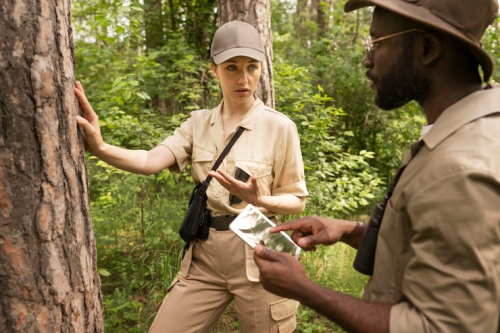
The forest hums with evening sounds crickets, a distant owl, the crackle of a campfire. In a clearing deep within the Smoky Mountains, a dozen campers lean forward, eyes fixed on an instructor demonstrating how to activate a personal alarm. This isn’t a typical night of stargazing or storytelling. These campers are here to learn survival skills, to arm themselves with knowledge against the unpredictability of the wild. As camping surges in popularity, personal safety workshops are becoming a vital part of the outdoor experience, equipping adventurers with the tools and confidence to face whatever lies beyond the trailhead.
The Surge in Safety-Conscious Camping
Americans are flocking to the outdoors in record numbers. National parks reported over 325 million visits in 2024, and backcountry camping is no longer just for rugged survivalists. Families, solo travelers, and weekend warriors are pitching tents in deserts, forests, and alpine meadows, drawn by the promise of escape and adventure. But the wilderness, for all its beauty, can be unforgiving. Wildlife encounters, sudden weather shifts, or rare but real human threats remind us that nature demands respect. This reality has sparked a growing demand for personal safety workshops, programs that blend traditional outdoor skills with modern self-defense and emergency preparedness.
The market for such training is booming. A recent industry analysis projects the survival training sector, which encompasses these workshops, will grow from $3.03 billion in 2024 to $3.38 billion in 2025, with a compound annual growth rate of 11.7%. By 2029, it’s expected to reach $5.22 billion, fueled by a surge in wilderness tourism, the rise of survivalist subcultures, and a cultural emphasis on readiness. Campers aren’t just packing sleeping bags anymore they’re investing in skills to stay safe.
Redefining Wilderness Preparation
Preparation for camping once meant mastering a few basics: how to start a fire, read a topographic map, or set up a tent. Today’s safety workshops go far beyond, offering a comprehensive toolkit for handling emergencies. Participants learn to administer first aid for cuts or sprains, use pepper spray effectively, and deploy emergency beacons in remote areas. Some programs even teach self-defense techniques tailored to outdoor scenarios moves to escape a grab or deter an aggressor in a secluded campsite.
Technology is transforming these trainings. Workshops now cover how to use GPS apps for navigation, satellite communicators for off-grid emergencies, and smartphone tools to share real-time locations with rangers. These innovations, once the domain of elite adventurers, are now accessible to everyday campers. Partnerships with local law enforcement further enhance credibility, with officers teaching de-escalation tactics or how to spot potential risks in unfamiliar terrain. As one ranger put it, “The wild isn’t a theme park. Knowing how to respond can mean the difference between a scare and a tragedy.”
Online learning is also gaining traction. Digital platforms offer interactive survival courses that teach navigation, shelter-building, and self-sufficiency through videos and simulations. These programs, designed for individuals, organizations, and even government agencies, make critical skills accessible to those who can’t attend in-person sessions, broadening the reach of safety education.
Stories of Empowerment
The impact of these workshops is tangible. In Oregon’s Deschutes National Forest, a community of campers collaborated with a safety training provider to offer regular workshops. The results were striking: fewer lost hikers, reduced campsite conflicts, and a stronger sense of preparedness among participants. One camper, a retiree new to solo camping, recounted using a personal alarm to ward off a curious bear, a moment that could have turned dangerous without her training. “I felt in control,” she said, “not panicked.”
Businesses are taking note. A major outdoor retailer launched a nationwide series of safety workshops, combining hands-on training with demonstrations of products like emergency whistles and compact flashlights. The initiative not only boosted sales but also deepened customer trust. Attendees left feeling valued, knowing the brand cared about their well-being. These programs are proving that safety training isn’t just practical it’s a way to build community and loyalty.
Self-defense tools are becoming campsite essentials. Pepper spray, small enough to attach to a keychain, is a common recommendation. Personal alarms, which emit a piercing sound to deter animals or signal for help, are increasingly popular. Portable LED lights, doubling as emergency beacons, round out the list. These items, once considered overkill, are now as standard as a good pair of hiking boots.
Barriers to Access
Despite their benefits, safety workshops face challenges. Accessibility is a persistent issue. Campers in urban areas might find programs at nearby outfitters, but those in rural regions often lack options, facing long travel distances or unreliable internet for online courses. Cost is another hurdle. High-quality workshops can carry steep fees, putting them out of reach for budget-conscious campers already stretched by the cost of gear.
Skepticism also persists. Some veteran campers dismiss safety training as unnecessary, arguing that decades of experience have served them well. Overcoming this mindset requires demonstrating the value of preparation without instilling fear. Organizing workshops is no small feat either. Securing qualified trainers, obtaining permits, and sourcing equipment demand significant resources, particularly in underfunded rural areas or cash-strapped park systems. Yet the growing demand suggests these obstacles are not insurmountable.
Opportunities for Growth
For businesses, the rise of safety workshops is a chance to innovate. The market for outdoor safety products from high-tech alarms to durable GPS devices is expanding rapidly. Companies that bundle these tools with training programs are seeing strong consumer interest. Picture a brand offering a camper’s safety kit pepper spray, alarm, and flashlight paired with a workshop voucher. It’s a compelling value proposition: peace of mind for customers, repeat business for retailers.
Strategic partnerships are another growth driver. Outdoor brands are collaborating with experts like former park rangers or self-defense instructors to deliver authoritative, engaging workshops. These alliances enhance brand credibility and position companies as leaders in a safety-focused market. Community engagement is an added benefit. A local gear shop hosting a free safety seminar can become a hub for campers, fostering connections that outlast the event itself.
A Safer Path Forward
Experts are clear: preparation is non-negotiable. A Colorado-based safety instructor with decades of experience says, “Nature is unpredictable, but you can be ready. Training turns fear into confidence.” The future of camping safety looks promising, with technology playing an ever-larger role. Virtual reality simulations, allowing campers to practice responding to flash floods or wildlife encounters, are on the horizon. Online courses continue to evolve, offering flexible, high-quality instruction for a global audience.
For campers, the takeaway is empowering: safety enables exploration. Carrying a personal alarm or knowing how to send an SOS signal means you can venture farther, stay longer, and embrace the wild with assurance. Experts advise starting with a workshop, whether in-person or online, and always packing essentials: a flashlight, an alarm, and a fully charged phone with a portable charger. For businesses, the opportunity is equally compelling. Offering safety workshops isn’t just about optics it’s about fostering a culture of preparedness and trust.
In that Smoky Mountains clearing, the workshop draws to a close. The campers stow their gear, their faces reflecting newfound resolve. They’ll rest easier tonight, equipped to handle whatever the wilderness might bring. As the campfire fades and the stars take over, one truth stands out: camping’s future is as much about staying safe as it is about seeking adventure. With safety workshops leading the way, the great outdoors is becoming a place where everyone can thrive.
Disclaimer: The above helpful resources content contains personal opinions and experiences. The information provided is for general knowledge and does not constitute professional advice.
You may also be interested in: Self Defense Products & Tools For Women | Stunner Safety
Walking alone shouldn’t feel like a risk you’re forced to take. Every day, thousands face potential threats without adequate protection. Stunner Safety‘s unique 3-in-1 self-defense lifeline is a stun gun, pepper spray, and flashlight combo in a lightweight design you’ll actually carry. Don’t just hope for safety carry it. Grab your Stunner Safety today!
Powered by flareAI.co
Leave a Reply